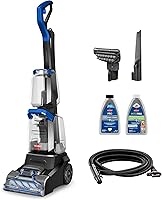
How to Choose a Carpet Cleaner Machine
Choose a carpet cleaner machine for the job you do most: an upright for rooms and traffic lanes, or a portable for spills, stairs and upholstery. Check carrying weight, tank capacity, fabric compatibility and cleanup before choosing extra features.
On this page (11 sections)
- What type of carpet cleaner machine do you need?
- How much weight and storage space can you manage?
- What tank capacity and refill routine should you compare?
- Which brushes, hoses and tools matter for your rooms?
- Which machine suits your cleaning routine?
- How should pet messes change your choice?
- How do you prepare carpet, rugs and upholstery?
- How do you fill and use the machine without overwetting?
- How much drying time should you allow?
- What care does a carpet cleaner need after use?
- Which carpet cleaner machine should you choose?
Choose a carpet cleaner machine for your most common job: an upright for rooms and traffic lanes, or a portable for spills, stairs and upholstery. Then check whether you can carry, fill, empty and store it comfortably.
Start with the surfaces you need to clean. A floor brush helps cover open carpet, while a hand tool gives you control over a small stain or cushion.
For a shortlist, compare the best carpet cleaners for home use, then use this guide to choose the format and features your home needs.
What type of carpet cleaner machine do you need?
Choose an upright for broad floor coverage and a portable for targeted cleaning. If you regularly clean both floors and furniture, consider an upright with a hose and suitable attachments.
| Type | Best fit | Main trade-off |
|---|---|---|
| Upright | Rooms and long traffic lanes | More machine to move and store |
| Portable spot cleaner | Spills, stairs, upholstery and car interiors | Slow work across a whole room |
| Upright with hose and tools | Floors plus occasional above-floor jobs | Needs stable placement while using the hose |
| Compact upright | Smaller carpeted homes and short cleaning sessions | Check tank size and included attachments |
A carpet cleaner sprays cleaning solution into suitable fibers and extracts dirty water. It does not replace routine dry vacuuming, which removes loose grit, crumbs and hair before wet cleaning.
For more on portable jobs, see our portable carpet cleaner guide.
Is an upright carpet cleaner right for your home?
An upright carpet cleaner makes sense when you clean continuous areas of carpet. Its floor head lets you work in overlapping lanes instead of kneeling over each patch with a hand tool.
Think about the route through your home, including doorways, furniture and stairs. A machine that fits the closet still needs enough space to turn during use.
Our Hoover PowerDash Pet review covers a compact example. If your jobs are split between floors and small stains, read the portable vs upright comparison.
When is a portable cleaner the better choice?
Choose a portable when small, scattered messes dominate your routine. It suits a stained stair tread, a spill beside the sofa or a patch of car upholstery better than cleaning an entire room.
The trade-off is manual work: you guide the tool, scrub as directed and make extraction passes over a small area. Regular whole-room cleaning calls for a floor head.
Check whether you can use a carpet cleaner on a couch before cleaning furniture. For steps and landings, compare our best carpet cleaners for stairs.
How much weight and storage space can you manage?
Choose a machine you can move through the full cleaning routine, including tank trips to the sink. Consider carrying weight separately from how easily an upright rolls across the floor.
| Machine | Format | Machine weight |
|---|---|---|
| Bissell Little Green 1400B | Portable | 9.7 lb |
| Bissell TurboClean | Upright | 13 lb |
| Bissell ProHeat 2X Pet Pro Plus | Upright with hose and tools | 17.5 lb |
| Hoover PowerDash Pet | Compact upright | 12.5 lb |
Water adds weight, so follow the manual's guidance on carrying and removing tanks. An empty machine's weight does not describe every lift you will make during a session.
Measure the storage space for height, width and depth. Leave room for hoses, tools and air circulation while cleaned parts finish drying.
If you clean upstairs often, carrying the machine may be the deciding factor. Also plan where it will sit safely while you work, especially near stairs.
What tank capacity and refill routine should you compare?
Compare capacity against the size of one normal cleaning session. A larger tank can reduce refill stops, while a smaller tank can suit short jobs near a sink.
| Machine | Capacity |
|---|---|
| Bissell Little Green 1400B | 48 oz clean-water tank |
| Bissell TurboClean | 1 gallon |
| Bissell ProHeat 2X Pet Pro Plus | 3.79 liters |
| Hoover PowerDash Pet | 0.5 gallon |
The TurboClean and ProHeat figures are roughly equal when converted to the same units. Keep clean-water and recovery-tank capacities separate when comparing machines.
There is no reliable room-size estimate based on tank capacity alone. Spray use, cleaning mode, soil level and the number of passes all change how far a fill goes.
Check how tanks lift out, whether they fit beneath your faucet and how you will empty them. Wide access for rinsing can matter more than squeezing in a little extra water.
Which brushes, hoses and tools matter for your rooms?
Choose a floor brush for carpeted areas and a compatible hand tool for detail work. Extra attachments are useful only when they match surfaces you actually clean.
A small tool reaches stair edges and upholstery seams, but it covers less area with each pass. A hose lets you reach away from the machine, though the base still needs a secure position.
For stairs, plan to move the machine as you progress rather than pulling the hose tight. Never balance it on a tread or let hose tension drag it toward an edge.
Confirm upholstery attachments before buying a floor-focused cleaner. A compact upright is not automatically a substitute for a portable spot machine.
Our best upholstery cleaner machines guide focuses on furniture needs. The portable spot cleaner guide is another route for localized cleaning.
Which machine suits your cleaning routine?
Choose the model whose format and tools match your recurring work. These 4 options cover spot cleaning, compact floor cleaning and floors with above-floor attachments.
Bissell Little Green 1400B: a carpet cleaner machine for isolated spots
The Bissell Little Green 1400B suits households that mainly clean small stains, stair treads and fabric seating. Its portable format makes more sense for scattered accidents than scheduled whole-room cleaning.
It includes a 3 in Tough Stain Tool, a HydroRinse Self-Cleaning Tool and trial-size formula. The stain tool handles cleaning work; HydroRinse helps with the hose-cleaning routine.
The spray, scrub and suction approach gives you control over a small area. You still need to spend time moving the hand tool across the fabric and extracting moisture.
Skip it for frequent whole-room jobs, where a floor head saves repeated kneeling and hand-tool passes. It is corded, so plan an outlet within reach of the cleaning area.
Bissell TurboClean: floors in smaller homes
The Bissell TurboClean suits buyers who want an upright for carpet and area rugs in small spaces. Its 4-row DeepReach PowerBrush addresses floor cleaning without making an upholstery tool the focus.
A removable nozzle gives you access for rinsing after use. It includes trial-size PRO MAX Clean + Protect and Pet Pro OXY Urine Eliminator formulas.
Choose it for a living-room carpet, hallway or recurring traffic lane. Its compact design is useful when you want an upright but have limited storage.
Skip it if stairs and sofas are the main reason you are buying. For those jobs, choose a portable or a machine with confirmed hose attachments.
Bissell ProHeat 2X Pet Pro Plus: floors plus furniture
The Bissell ProHeat 2X Pet Pro Plus suits homes that need one upright for floors and attached tools for other fabric surfaces. Its 8 ft hose reaches beyond the floor head.
It includes a 2-in-1 Pet Upholstery Tool and a 3 in Tough Stain Tool. Dual DirtLifter PowerBrushes handle floor scrubbing, while the CleanShot pretreater targets spots.
MAX Clean and Express Clean modes let you choose between a deeper cleaning session and a lighter refresh. A removable one-piece brush roll cover provides access for cleanup.
Choose it when recurring floor work and furniture cleaning both matter. Skip it for occasional small spills or frequent carrying between floors if a lighter portable would meet your needs.
Hoover PowerDash Pet: compact floor cleaning
The Hoover PowerDash Pet suits buyers who want a compact upright for smaller carpeted spaces. Its PowerSpin Pet Brush Roll handles floor cleaning, and a sample solution is included.
It fits a routine built around short carpet-cleaning sessions rather than long runs across many rooms. The smaller capacity means you should plan refill trips when covering larger areas.
Choose it if compact storage and manageable machine weight take priority over fewer stops. Hoover describes its brush roll as antimicrobial to help control odors in the machine, which does not mean it disinfects carpet.
Skip it if you want to clean large areas with fewer refills, or if furniture attachments are essential. Choose a format built around those needs.
How should pet messes change your choice?
Choose by where and how often accidents happen, rather than buying on a pet label alone. Scattered spots favor a portable; repeated messes across floors favor an upright.
For urine, a machine can extract liquid from fibers, but contamination may extend into backing, padding or the floor below. A lingering odor can call for treatment beyond another surface pass.
Remove solid waste and blot excess liquid before using the machine. Follow a compatible treatment's directions, including any dwell time, rather than immediately extracting a product that needs time to work.
Avoid repeated soaking in an attempt to chase an odor. More water can spread moisture deeper and make drying harder.
Compare the best carpet cleaners for pets for broader needs. For accidents, use the best carpet cleaners for pet urine and our guide to cleaning pet urine from carpet with a machine.
How do you prepare carpet, rugs and upholstery?
Confirm wet-cleaning compatibility, vacuum and clear the area before filling the machine. Preparation keeps loose debris out of the wet-cleaning process and gives you room to work steadily.
Check the carpet or rug maker's care guidance, especially for wool, delicate fibers and rugs over moisture-sensitive floors. Do not assume that every area rug can tolerate machine cleaning.
For upholstery, read the care code and the furniture maker's instructions. W generally allows water-based cleaning, S calls for solvent-based care, and X generally limits cleaning to vacuuming or professional care.
Try the approved solution on a hidden area and let it dry before proceeding. Look for color transfer, texture changes or water marks.
Move small furniture and plan a route toward the exit. Keep children and pets away until the carpet is dry, and avoid putting furniture legs directly onto damp fibers.
How do you fill and use the machine without overwetting?
Use the specified formula, water temperature and pass pattern for your machine. More detergent and more spray do not improve every stain.
Measure formula to the correct fill line rather than guessing. Dish soap, laundry detergent and other household cleaners can create excess foam or leave residue; our carpet cleaner solution guide explains how to choose a suitable product.
Seat the tanks and attach tools before starting. Check that the recovery tank is empty and that covers and seals are secured as directed.
Work in small sections with modest overlap. Follow wet passes with suction-only passes where the instructions allow, moving steadily so the tool can recover water.
Stop at the recovery tank's fill limit or when the machine signals it needs attention. If pickup drops, check the tank, seals and accessible clogs before adding more solution.
For a stubborn spot, pause and identify the stain instead of repeatedly scrubbing harder. Our spot-cleaning guide helps you choose the next step.
How much drying time should you allow?
Plan for airflow and a clear drying window, even if the machine offers a faster-drying feature. Carpet thickness, humidity, cleaning mode and water recovery all affect the result.
Hoover says HeatForce on the PowerDash Pet helps carpets dry faster. Bissell says the ProHeat's Express Clean mode can leave carpets dry in about 30 minutes.
That Express estimate applies to that mode, not every cleaning session. Check the carpet itself before reopening the room or replacing furniture.
Use fans and suitable ventilation, and avoid extra wet passes once the area has received enough solution. Read how long carpet takes to dry after cleaning to plan around your room's conditions.
What care does a carpet cleaner need after use?
Empty, rinse and dry the machine after every session using the manual's instructions. Leaving dirty water and damp debris inside makes the next job less pleasant and can restrict water pickup.
Unplug the machine before removing parts or clearing hair from accessible brush areas. Rinse recovery tanks, nozzles and tools as directed, paying attention to corners where grit collects.
Use the approved hose-rinsing method for machines with hoses. Do not assume a self-cleaning tool cleans every tank, brush or nozzle.
Let washable parts dry before reassembly and storage, following any instructions about open lids or removed tanks. Antimicrobial components do not replace this routine.
For the portable Bissell, see our guide to cleaning a Bissell Little Green.
Which carpet cleaner machine should you choose?
Pick Little Green for isolated spots, TurboClean for small-space floor cleaning, ProHeat for floors plus attached tools, or PowerDash for short upright cleaning sessions. Let your most frequent job settle the choice.
Before buying, confirm fabric compatibility, carrying demands, storage fit and the cleanup routine. A feature you rarely use should not outweigh a machine you can comfortably bring out and maintain.
If you are still split between formats, use our portable carpet cleaner guide to check whether your everyday jobs really need an upright carpet cleaner machine.
Frequently asked questions
What should I look for in a carpet cleaner machine?
Start with the area you clean most, then compare carrying weight, tank capacity, floor brushes, hose tools and cleanup. Choose an upright for broad carpeted areas or a portable for small spots.
Confirm that your carpet or upholstery allows wet cleaning before deciding which extra features you need.
Is an upright or portable carpet cleaner better?
An upright is better for rooms and long traffic lanes, while a portable is better for isolated stains, stairs and furniture. If you need both, consider an upright with a hose and suitable tools.
Remember that the upright still needs a stable place to sit during above-floor cleaning.
Do carpet cleaner machines work on upholstery?
Some machines work on upholstery when paired with a suitable hose, tool and formula, but the fabric must allow water-based cleaning. Check the furniture care label and machine instructions first.
A W code generally permits water-based cleaners; an S or X code calls for a different care method.
How much does tank size matter in a carpet cleaner?
Tank size matters most when you clean large areas without wanting frequent refill stops. Smaller tanks can suit short spot-cleaning sessions, but compare clean-water and dirty-water capacities separately.
Also consider the filled carrying weight and where you will fill, empty and rinse the tanks after each job.
How do I choose a carpet cleaner for pet messes?
Choose by where accidents happen: a portable suits isolated spots, while an upright suits repeated messes across carpeted rooms. For furniture or stairs, confirm that suitable tools are included.
Use a compatible formula, remove solid waste first and avoid assuming that surface cleaning will reach urine beneath the carpet.