6 Best Carpet Cleaners for Stairs (October 2026)
The best portable carpet cleaners for carpeted stairs include the Bissell Little Green Mini for small stair spots, the Shark StainStriker PX202BRN for mixed stair messes, and the Bissell Little Green Pet Deluxe for recurring pet accidents.
On this page (7 sections)
- Which is the best carpet cleaner for stairs for your home?
- What should you check before buying a stair carpet cleaner?
- How should you set up a carpet cleaner on stairs?
- How do you clean stair carpet without soaking it?
- Which stair-cleaning mistakes should you avoid?
- How should you dry the stairs and care for the cleaner?
- Which carpet cleaner for stairs should you choose?
The Bissell Little Green Mini is the best carpet cleaner for stairs for routine spot cleanup because its compact body and focused tool suit small stair stains. Choose a larger model if your usual job covers a whole flight or several pet accidents.
The right choice depends on how you'll position the machine, which parts of each step need cleaning, and how much equipment you can comfortably carry. A big tank helps with longer jobs, but only if you have a safe place to put it.
For more compact options, read our guide to portable carpet cleaners. If the job also includes chairs or cushions, our upholstery cleaner machine guide explains how to choose for those surfaces.
Our picks at a glance
-
1

-
2

-
3

Which is the best carpet cleaner for stairs for your home?
Choose Bissell Little Green Mini for isolated spots, Shark for varied tool needs, or Little Green Pet Deluxe for recurring pet accidents. The Hoover options suit broad treads, longer jobs or buyers who put easier carrying first.
GladSwap compared carrying weight, tank capacity, included tools and storage needs for these picks. Use the scores to narrow your choices, then match the machine to the work you'll do most often.
| Product | Best for | Tools | Capacity | Weight | Our score |
|---|---|---|---|---|---|
| Bissell Little Green Mini | small stair spots | 4 in Tough Stain Tool; HydroRinse hose tool | 16 oz | 7 lb | 9.3 |
| Shark StainStriker PX202BRN | mixed stair messes | Four specialized tools | 2 liters | 8.5 lb | 8.9 |
| Bissell Little Green Pet Deluxe | recurring pet accidents | 3 in Tough Stain Tool; Stain Trapper; HydroRinse hose tool | 48 oz | 9.7 lb | 8.7 |
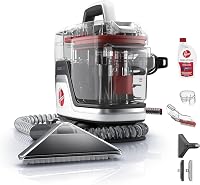
| Hoover CleanSlate Plus | broad stair treads | 7 in WidePath; TightSpot; hose rinse tool | 40 oz clean solution | 9.4 lb | 8.6 |
| Hoover CleanSlate XL | larger stair jobs | WidePath; TightSpot; Pet Tool; hose rinse tool | 96 fl oz | 11 lb | 8.0 |
| Hoover Spotless Mini | easier carrying | 12.8 fl oz | 6.3 lb | 7.0 |
Bissell Little Green Mini: best carpet cleaner for small stair spots
Bissell Little Green Mini: Best for small stair spots
- Compact design for small spaces
- 4 in Tough Stain Tool
- HydroRinse hose tool
- Includes Little Green Formula
Choose this compact cleaner for isolated stair stains and limited storage space. Its focused stain tool suits small areas, while the small tank makes it less convenient for a full staircase.
Pros
- Fits small storage spaces
- Removable tool lens helps with cleanup
- Includes a hose rinse tool
Cons
- Small tank means more refills on larger jobs
The Little Green Mini suits a home where stair cleaning usually means a spilled drink, a muddy mark or a small patch near the landing. Its 7 lb body is easier to carry between floors than the larger machines here.
The 4 in Tough Stain Tool gives you a focused working area, and its removable lens helps you reach collected debris during cleanup. The included HydroRinse tool supports flushing the hose after a dirty job.
Its 16 oz capacity favors short sessions. Skip it if your usual plan is to clean every tread and riser, since refill trips can interrupt a job that already requires moving the machine.
Storage is another reason to choose it: the body measures 10 in deep, 13.5 in wide and 12.13 in high. Allow room for the hose and accessories too, then read how to use a Bissell Little Green before your first cleanup.
Shark StainStriker: for varied tread shapes and messes
Shark StainStriker PX202BRN: Best for mixed stair messes
- Four specialized tools
- Crevice tool and pet mess extractor
- Compact storage design
- Two formulas mix inside the machine
Choose Shark for a mix of narrow edges, broader tread stains and pet messes. Its attachment range suits varied jobs, but its two-formula system adds supplies to manage.
Pros
- Wide and narrow tools for different areas
- Includes a pet mess extractor
- No formula premixing required
Cons
- Two-formula system adds supplies to store
Shark StainStriker PX202BRN suits stairs with a mix of broad carpeted areas, tight edges and occasional pet accidents. Its four-tool set includes a crevice tool, smaller and wider stain tools, and a pet mess extractor.
That range is useful if one attachment would struggle to fit every part of the staircase. Use a tool that sits flat against the carpet rather than choosing the widest head for every spot.
The machine weighs 8.5 lb and has a 2-liter capacity. Its two formulas mix inside the machine without premixing, so choose it if you're comfortable keeping both cleaning supplies on hand.
Skip Shark if you mainly clean one small, open patch and want fewer accessories to store and rinse. Its tool range earns its place when you'll use it across stairs and other soft surfaces; our Bissell Little Green vs Shark StainStriker comparison helps narrow that choice.
Bissell Little Green Pet Deluxe: for repeated pet cleanup
Bissell Little Green Pet Deluxe: Best for recurring pet accidents
- 48 oz tank
- 3 in Tough Stain Tool
- Stain Trapper Tool
- HydroRinse hose tool
The pet-focused tool set and included formulas suit homes with repeated stair accidents. Its larger tank supports cleaning several spots, with more carrying weight than the mini options.
Pros
- Tank suits several spots per session
- Includes a Stain Trapper Tool
- Includes pet stain formula and OXY Boost
Cons
- Less suited to buyers prioritizing low carrying weight
Little Green Pet Deluxe suits homes where pet accidents are a recurring cleanup job across stairs, rugs and upholstery. It includes a 3 in Tough Stain Tool, Stain Trapper Tool and HydroRinse hose tool.
The 48 oz tank gives you more room for several spots before refilling. At 9.7 lb, though, this is a better match for buyers who value capacity over the lightest possible carry.
The kit includes PET Spot and Stain formula plus PET OXY Boost. Bissell says this combination helps remove pet stains and odors, making the package useful when pet cleanup drives the buying decision.
Skip it if pet accidents are rare and your main need is a small spill cleaner. For recurring urine odor, first work out whether the mess has reached below the surface; our guide to carpet cleaners for pet urine covers that buying concern.
Hoover CleanSlate Plus: for broad treads and tight edges
Hoover CleanSlate Plus: Best for broad stair treads

- 7 in WidePath tool
- TightSpot tool
- 40 oz clean solution capacity
- Hose rinse tool
Choose the CleanSlate Plus for broad treads that also need attention along tight edges. Its wide and narrow tools suit that mix without moving to the heavier XL.
Pros
- Wide tool covers broad sections
- TightSpot tool reaches crevices
- Separate clean and dirty water tanks
Cons
- More weight to carry than the mini options
Hoover CleanSlate Plus suits stairs with broad, open treads and narrower spaces along the sides. Its 7 in WidePath tool covers larger sections, while the TightSpot tool lets you switch to more focused work.
The dual-tank system keeps clean solution and recovered water separate, with a 40 oz clean solution capacity. A hose rinse tool helps flush out residue when the stair job is done.
This is a useful middle choice if the smallest machines seem too limited but you don't need the XL's larger tank. It weighs 9.4 lb and measures 14 in deep, 10.5 in wide and 13 in high.
Skip it if your staircase has little open carpet and most marks sit in narrow corners. Check your planned parking spot before buying, and use our guide on how to use a Hoover carpet cleaner alongside the model's own directions.
Hoover CleanSlate XL: for longer stair-cleaning sessions
Hoover CleanSlate XL: Best for larger stair jobs

- 96 fl oz tank capacity
- 7 in WidePath tool
- TightSpot tool
- Pet Tool and hose rinse tool
Choose the XL when longer cleaning sessions make refill breaks inconvenient. Its large tank and varied tools suit bigger jobs, provided carrying weight is manageable.
Pros
- Largest tank capacity here
- Includes a Pet Tool
- Wide and narrow tools support varied areas
Cons
- Heaviest pick here
- Filled tank adds to carrying load
Hoover CleanSlate XL suits buyers who plan larger stair jobs and want fewer trips to refill. Its 96 fl oz capacity is the largest here, making it the capacity-first choice.
The attachments cover several tasks: a WidePath tool for broad areas, TightSpot tool for tight spaces, and Pet Tool for pet messes. The included hose rinse tool also helps with the cleanup afterward.
The tradeoff is 11 lb of machine weight, before accounting for water carried in the tank. Choose it when you can comfortably move it and have a stable position from which the hose can reach the work.
Skip the XL for occasional isolated spills or frequent carrying between floors. Its body measures 11.5 in deep, 14.1 in wide and 13.3 in high, so plan storage and working space rather than assuming a larger-capacity cleaner will fit wherever a mini does.
Hoover Spotless Mini: for low carrying weight
Hoover Spotless Mini: Best for easier carrying

- Compact, lightweight design
- Easy-fill tank with fill lines
- Built-in hose rinse port
- Made for stairs and car interiors
Choose this Hoover for occasional small spills when low carrying weight matters most. Its small tank makes it a poor match for cleaning an entire flight in one session.
Pros
- Lightest pick here
- Built-in hose rinse port
- Fill lines help with measuring
Cons
- Smallest tank capacity here
Hoover Spotless Mini suits small, occasional messes when carrying weight is your main concern. At 6.3 lb, it's the lightest machine in this group and is designed for stairs, furniture and car interiors.
Its 12.8 fl oz capacity puts it firmly in the spot-cleaning role. Choose it for a localized spill rather than expecting to work along a whole staircase without stopping.
The easy-fill tank has visible fill lines, which help you measure water and solution correctly. A built-in hose rinse port supports flushing the hose before storage, so the end of a small job needn't become a separate lengthy chore.
Skip it if you regularly clean several steps or want the broader attachment sets included with other picks. Its compact design suits under-sink storage, but leave enough room to store the hose without tight bends and let cleaned parts dry before putting everything away.
What should you check before buying a stair carpet cleaner?
Start with safe placement and reach, then choose the tool and tank size that fit your usual cleanup. A machine's usefulness on stairs depends on how it works in your space.
Where will the machine sit?
Identify a stable, level place on a landing or nearby floor before choosing a model. Don't plan to balance a cleaner on a narrow tread or hang it from the hose.
Measure the available space, including room to remove the tanks. Leave enough slack to move the tool without pulling the machine toward an edge.
Hose and cord reach can decide whether a cleaner fits your staircase. Check those measurements before ordering if your landing is small or the nearest outlet is far away.
Which tool fits the carpeted surfaces?
Choose a tool that can make even contact with the area you're cleaning. A broad head suits an open tread, while a smaller attachment is easier to position near corners and on short sections.
Look beyond the flat step surface. Carpeted risers, curved steps and the rounded front edge of a tread can require a different angle or attachment.
A wider tool offers little benefit if part of its suction opening hangs beyond the carpet. Good contact matters more than covering the biggest possible strip.
How much water will you need to carry?
Choose capacity around your normal job, not a fixed number of steps. Water use changes with stain size, carpet thickness, solution directions and how much of each step you clean.
A larger clean tank doesn't remove every interruption. You still need to watch the dirty-water fill limit, reposition the machine and check that the tool remains clear.
Treat machine weight as the starting point for carrying. Water and recovered mess add weight, so move the unit before filling when the instructions allow.
Do you also need to clean whole rooms?
Choose a portable cleaner when stairs and scattered spots are the main job. For repeated wall-to-wall cleaning, compare the portable and upright cleaner differences before buying.
Our guide to carpet cleaners for home use covers broader floor-cleaning needs. If you choose an upright with hose attachments, check its stair-use directions and reach rather than assuming every upright can handle the job.
How should you set up a carpet cleaner on stairs?
Set up before wetting any carpet, with a clear route for the cord, a stable machine position and time for drying. Keep everyone else off the staircase while you work.
Check the carpet and prepare the mess
Read the carpet care directions to confirm that wet extraction is allowed. For wool, delicate fibers or an unknown carpet type, get care advice before applying solution.
Check colorfastness in a hidden spot as the care directions require. Let that area dry so you can check for color transfer or a change in appearance.
Remove solid debris and blot fresh liquid with a clean absorbent cloth. Vacuum dry grit and loose hair first so they don't become extra debris in the tool and recovery tank.
Fill and position the cleaner
Use the water temperature, solution and dilution stated in the machine's directions. Don't add extra detergent to make the mix stronger or combine separate cleaning chemicals.
Seat the tanks securely and check that the tool is attached before starting. Keep plugs and connections dry, and arrange the cord so it won't cross the step where you're standing.
Work within comfortable hose reach. Stop and reposition the machine whenever reaching farther would mean leaning awkwardly, stretching the hose tight or standing on wet carpet.
Plan how you'll leave the stairs to dry
Choose a cleaning direction that lets you finish on dry footing. On some staircases, it makes sense to clean separate reachable sections rather than trying to complete the whole flight at once.
If this is the only route between floors, choose a time when nobody needs to pass. Don't depend on stepping along the edges of wet treads to keep the stairs usable.
How do you clean stair carpet without soaking it?
Apply only the solution needed, then spend time extracting moisture with the spray released. More water and harder scrubbing can create more work without solving the stain.
Work in small, controlled sections
Follow the machine's method for spraying and moving the tool. If the formula calls for dwell time, allow it to work without letting the area become saturated.
Use gentle, controlled strokes instead of grinding the brush into the carpet. Repeated harsh scrubbing can roughen fibers and leave a patch that looks different even after the dirt is gone.
Clean a manageable section of one step before moving on. Overlap the tool path enough to avoid missed strips, while watching how much liquid you're applying.
Give extraction its own passes
Make slow suction passes with the spray released, as directed for the machine. Keep the head flat enough to draw moisture through its opening.
Pay attention to the front edge and corners, where it's easy to lose contact. Change the tool angle or use a smaller attachment rather than pouring more solution onto an awkward spot.
If pickup suddenly weakens, stop and check the recovery tank, tank seating and tool for debris. Don't keep adding water while the machine isn't recovering it properly.
Stop when the stain needs another approach
A mark that remains after careful cleaning may need a different treatment, not another round of soaking. Let the carpet dry before deciding how much discoloration remains.
For a concentrated spill, our guide on how to spot clean carpet stains at home helps you choose a suitable next step. Avoid stacking several stain removers onto the same wet patch.
Which stair-cleaning mistakes should you avoid?
Avoid excess liquid, poor tool contact and rushed cleanup. These mistakes can leave damp carpet, detergent residue or a dirty machine ready to spread yesterday's mess.
- Using extra detergent: Follow the measured dose. Excess foam can interfere with recovery and leave residue in the carpet.
- Using the widest tool everywhere: Switch attachments when the head can't sit properly against a corner, riser or curved edge.
- Pulling the machine by its hose: Stop and carry it to the next stable position using the intended handle.
- Ignoring recovery-tank limits: Empty at the marked limit, even if clean solution remains.
- Chasing every trace of color with more water: Some discoloration needs a separate stain approach after drying.
- Walking on damp steps: Keep the route closed until the carpet is dry, including the front edges and corners.
Pet accidents need extra judgment. If urine has soaked into backing or underlay, repeated surface cleaning may leave the source below the area the tool can reach.
A returning mark can also mean material is moving back toward the surface as the carpet dries. Pause and reassess instead of starting an endless cycle of spraying and extracting.
How should you dry the stairs and care for the cleaner?
Use airflow and thorough extraction to help the carpet dry, then empty and rinse the machine before storage. Hose-rinse features support that routine but don't replace cleaning the tanks and tools.
Let the whole step dry
Open windows when conditions allow or direct a fan across the stairs from a safe position. Keep its cord clear of the walking route and away from wet areas.
Drying time depends on moisture left behind, carpet construction, airflow and room conditions. Don't promise access at a set hour simply because the surface starts to feel less damp.
Check corners, risers and tread edges before reopening the route. Our guide to carpet drying time after cleaning explains what affects the wait.
Remove dirty water and trapped debris
Switch off and unplug the cleaner before removing parts, following its directions. Empty the recovery tank promptly, then rinse away collected dirt and residue.
Remove hair and fibers from the tool opening and brush. Clean removable lenses or covers only as directed, and check seals before putting the parts back.
Use the supplied hose rinse tool or built-in rinse port according to the model's instructions. Don't submerge the machine body or assume a hose flush cleans every part of the system.
Store the machine ready for another spill
Let rinsed parts dry before closing the cleaner away. Follow the manual for any remaining clean solution rather than assuming it can stay in the tank indefinitely.
Store accessories together so a missing tool doesn't delay the next cleanup. Coil the hose without sharp bends, and choose a dry storage spot that's easy to reach.
Which carpet cleaner for stairs should you choose?
Choose the best carpet cleaner for stairs by matching it to your most common job and your safe working space. Make the final choice with these rules:
- Routine isolated spots: Choose Bissell Little Green Mini for a compact cleaner with a focused tool and hose-rinse accessory.
- Mixed stains and awkward edges: Choose Shark StainStriker when you'll use its wider attachment range across several surfaces.
- Recurring pet accidents: Choose Bissell Little Green Pet Deluxe for its pet-focused accessories, formulas and room for several spots.
- Broad treads with tight side edges: Choose Hoover CleanSlate Plus for its wide and narrow tools.
- Larger planned cleaning jobs: Choose Hoover CleanSlate XL when capacity matters more than carrying weight.
- Occasional spills and easier carrying: Choose Hoover Spotless Mini if a small tank fits your routine.
Before ordering, confirm where the machine will sit and whether its hose can reach the work safely. If furniture cleanup is equally important, compare these choices with our best upholstery cleaner machines to choose one machine for both jobs.
Our top 3 picks at a glance
-
1
-
2
-
3
Frequently asked questions
What type of carpet cleaner works best on stairs?
A portable spot cleaner with a hose tool is the most practical choice for targeted stair stains. Choose a body you can carry comfortably and an attachment that fits your treads.
If you also need to clean whole rooms, compare the options in our portable vs upright carpet cleaner guide.
Can you use a portable carpet cleaner on carpeted stairs?
Yes, if the machine is intended for stairs and the carpet allows wet cleaning. Check both care guides before adding water or solution.
Place the cleaner on a stable, level surface within reach of the work, keep the cord clear of your feet, and leave the stairs closed until dry.
What should I check before cleaning carpeted stairs?
Check the carpet's wet-cleaning instructions, the machine's approved solution and a safe place to position the cleaner. Vacuum loose debris and check colorfastness in a hidden area as directed.
Plan your cord route and drying time before starting, especially if the staircase is the only route between floors.
Is a larger tank better for cleaning stairs?
A larger tank helps when you clean many steps in one session, but it also adds water weight when filled. Smaller tanks suit isolated spills and easier carrying.
Choose for your usual job rather than an occasional deep clean, and remember that the dirty-water tank may need emptying before you refill.